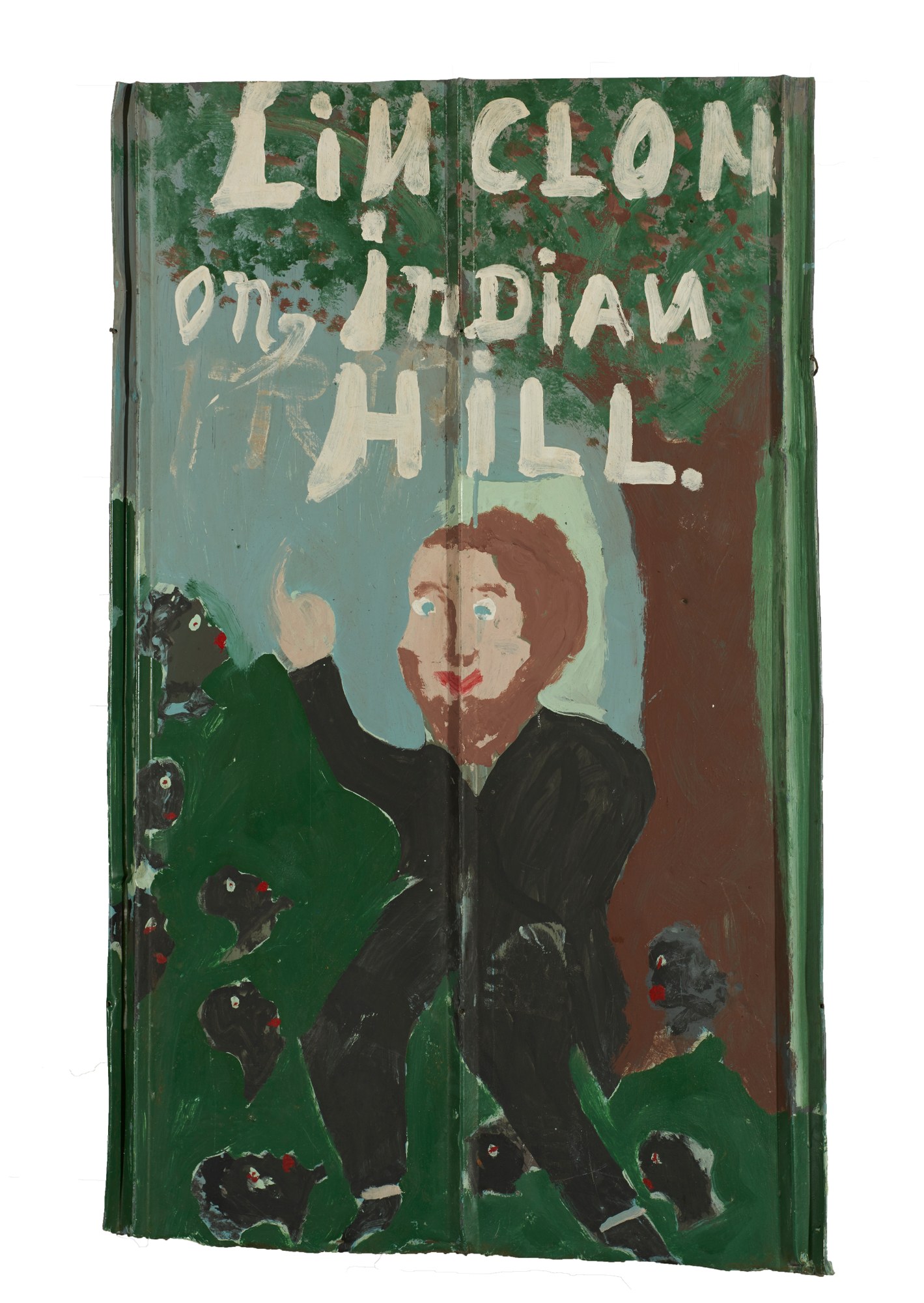
Lincoln on Indian Hill
1978/82
enamel paint on roofing tin
106 x 64.3 x 1.5 CM 41.73 x 25.31 x 0.59 IN
Sam Doyle
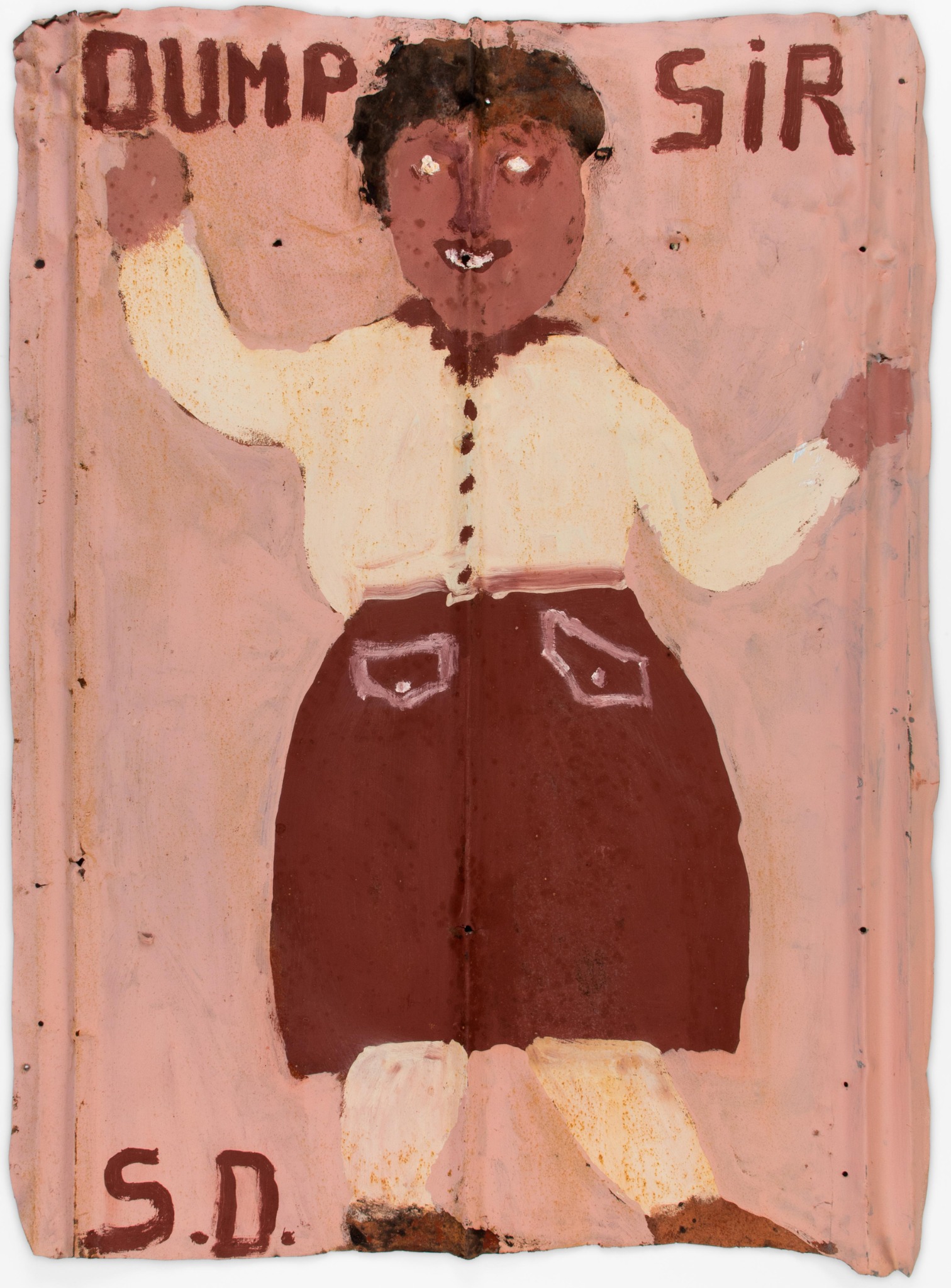
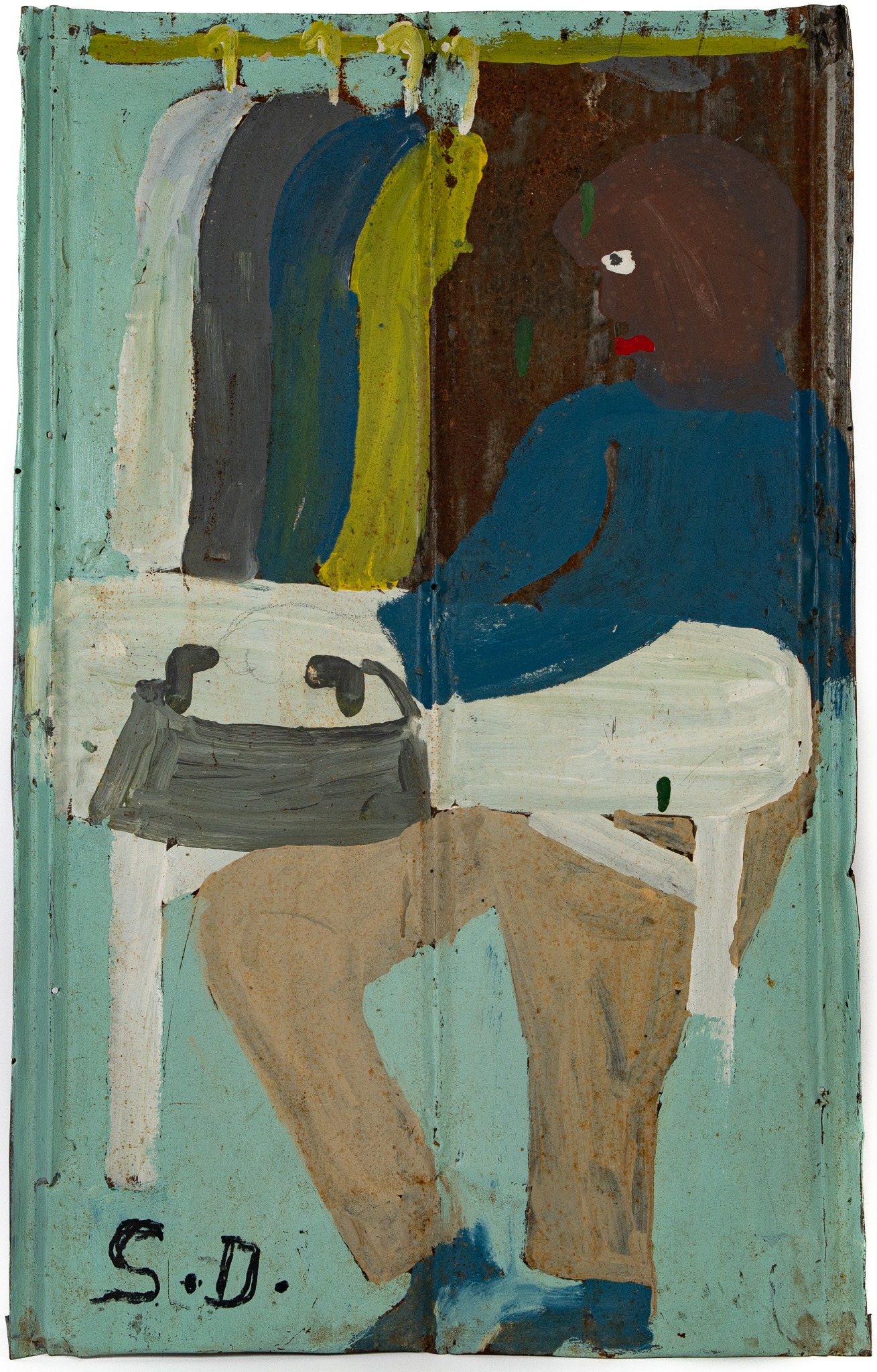
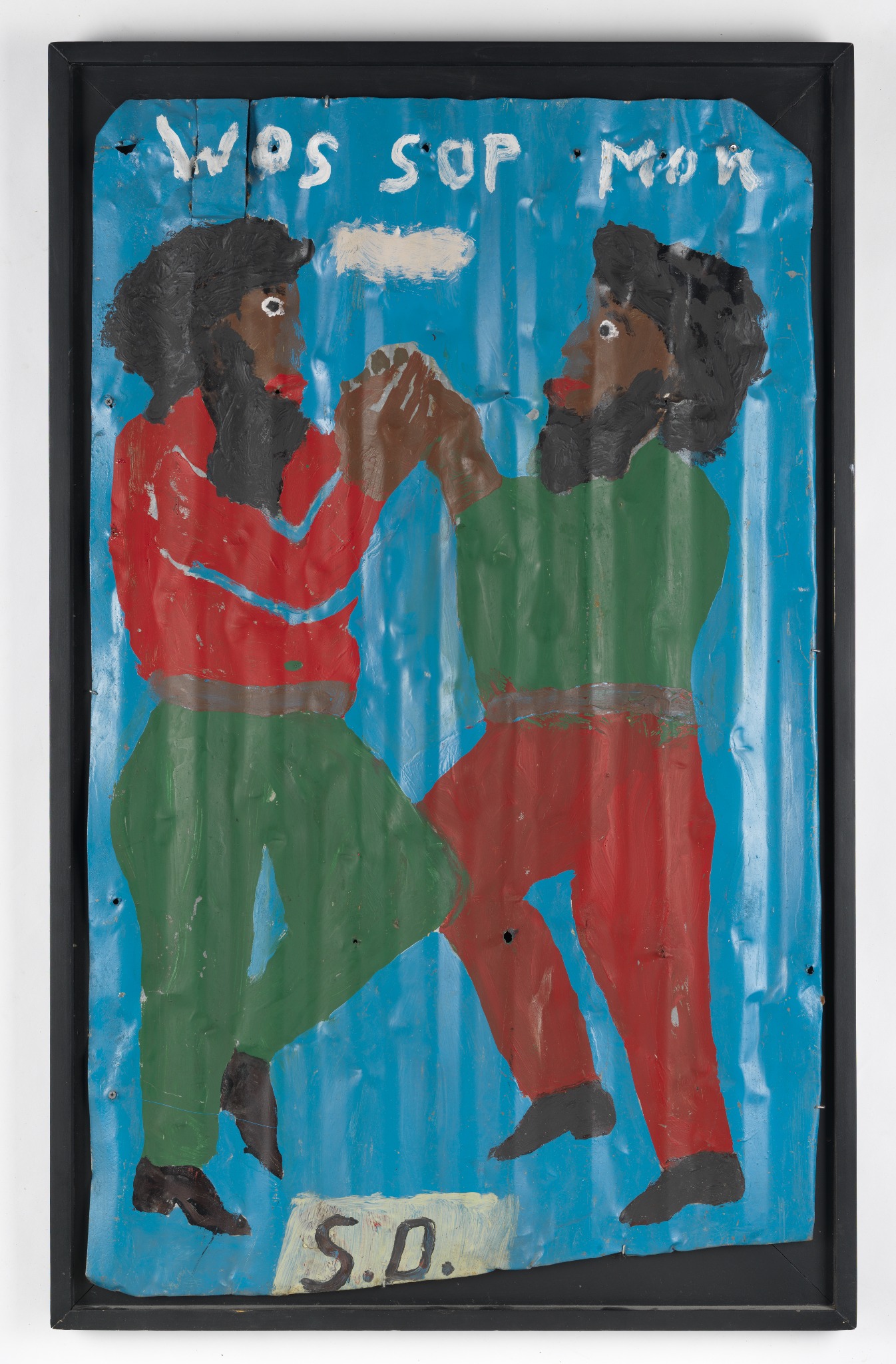
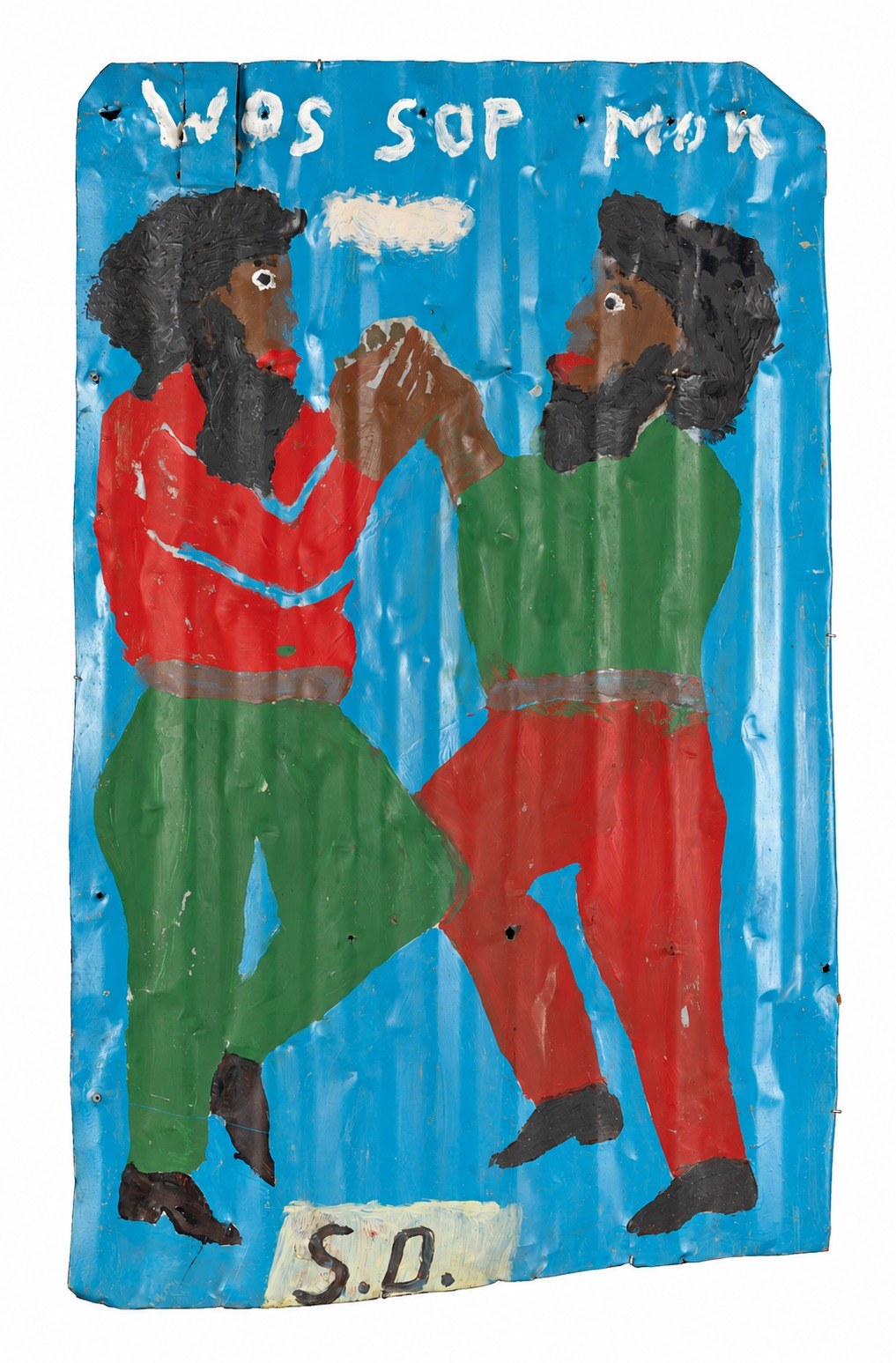
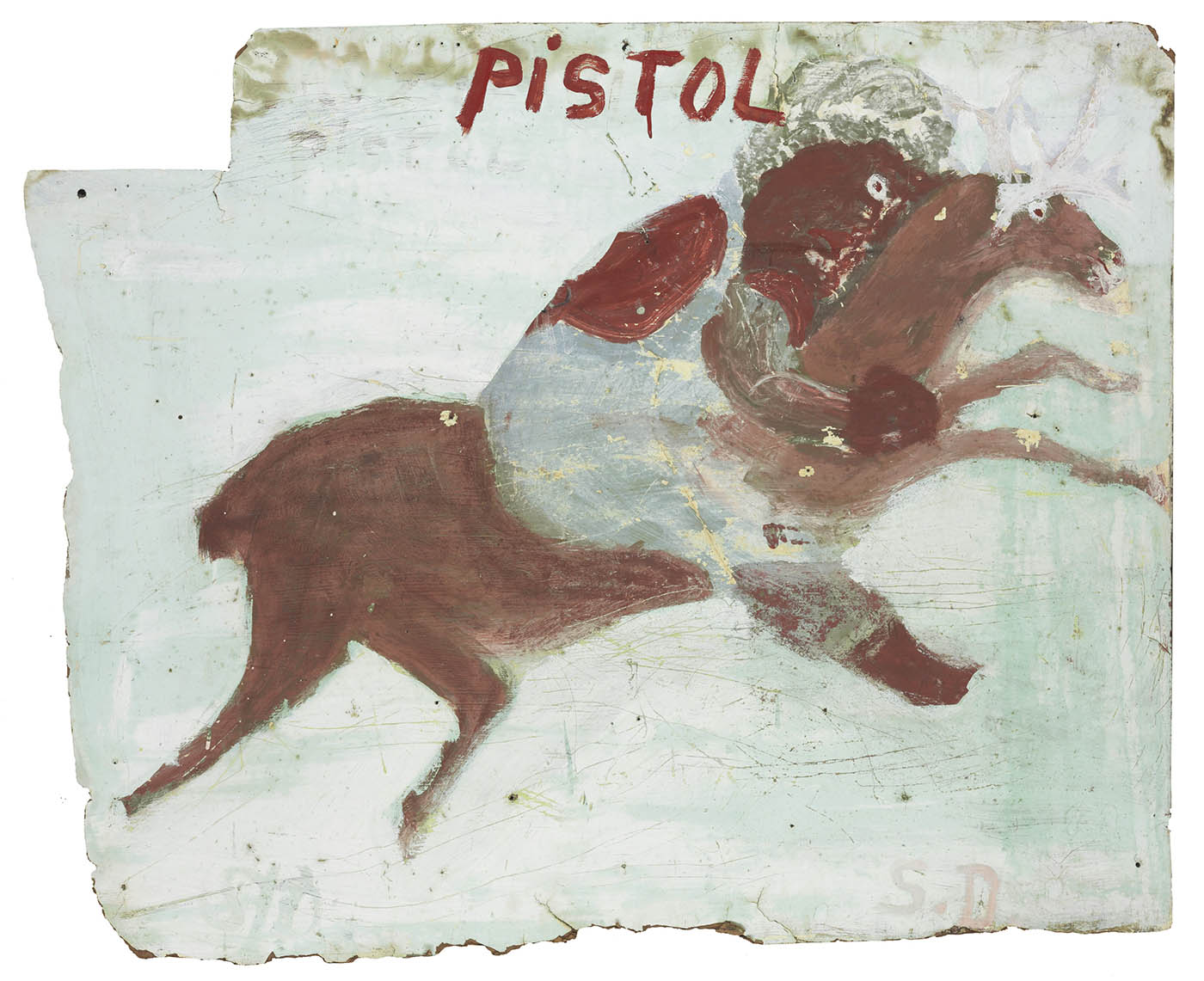
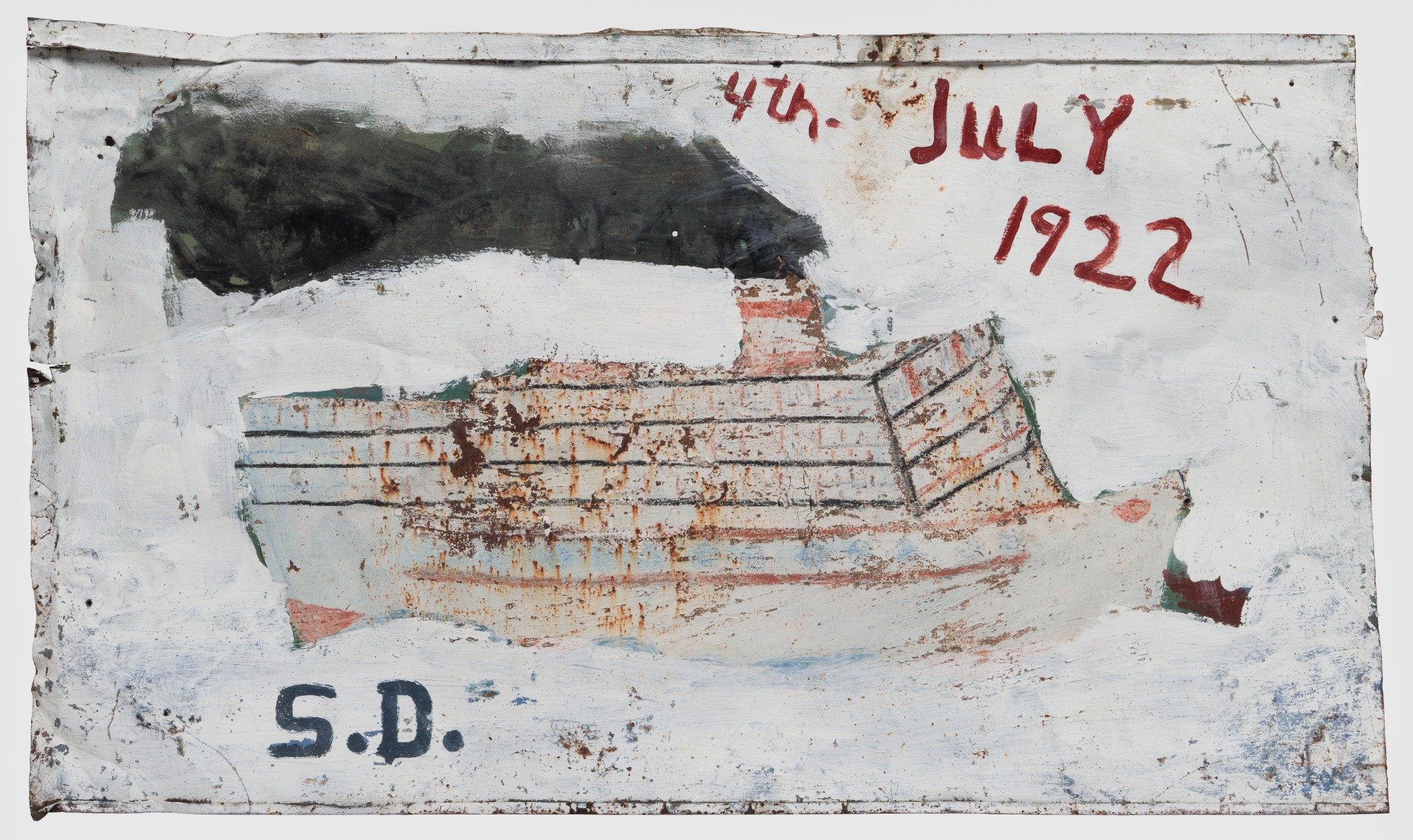
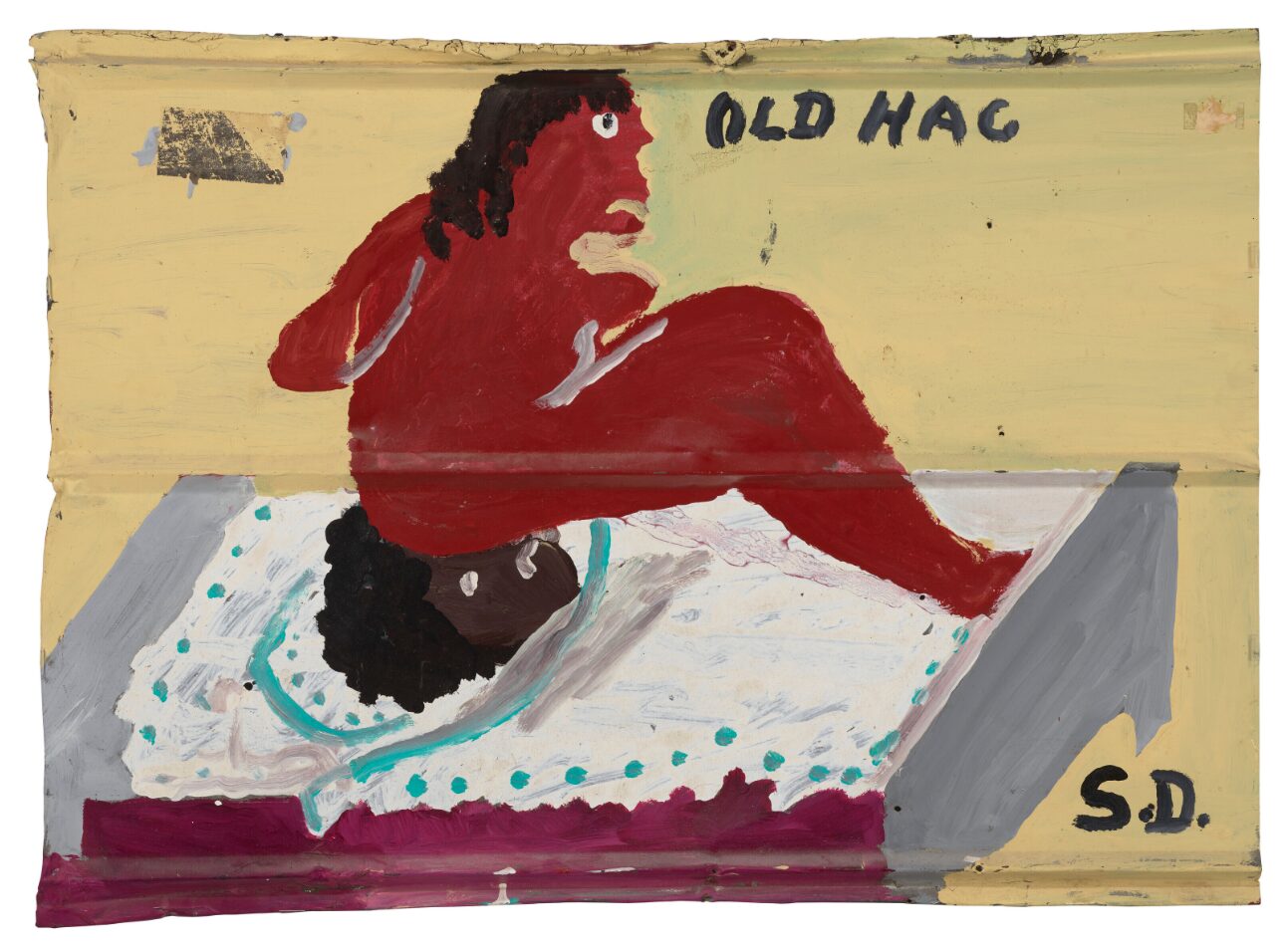
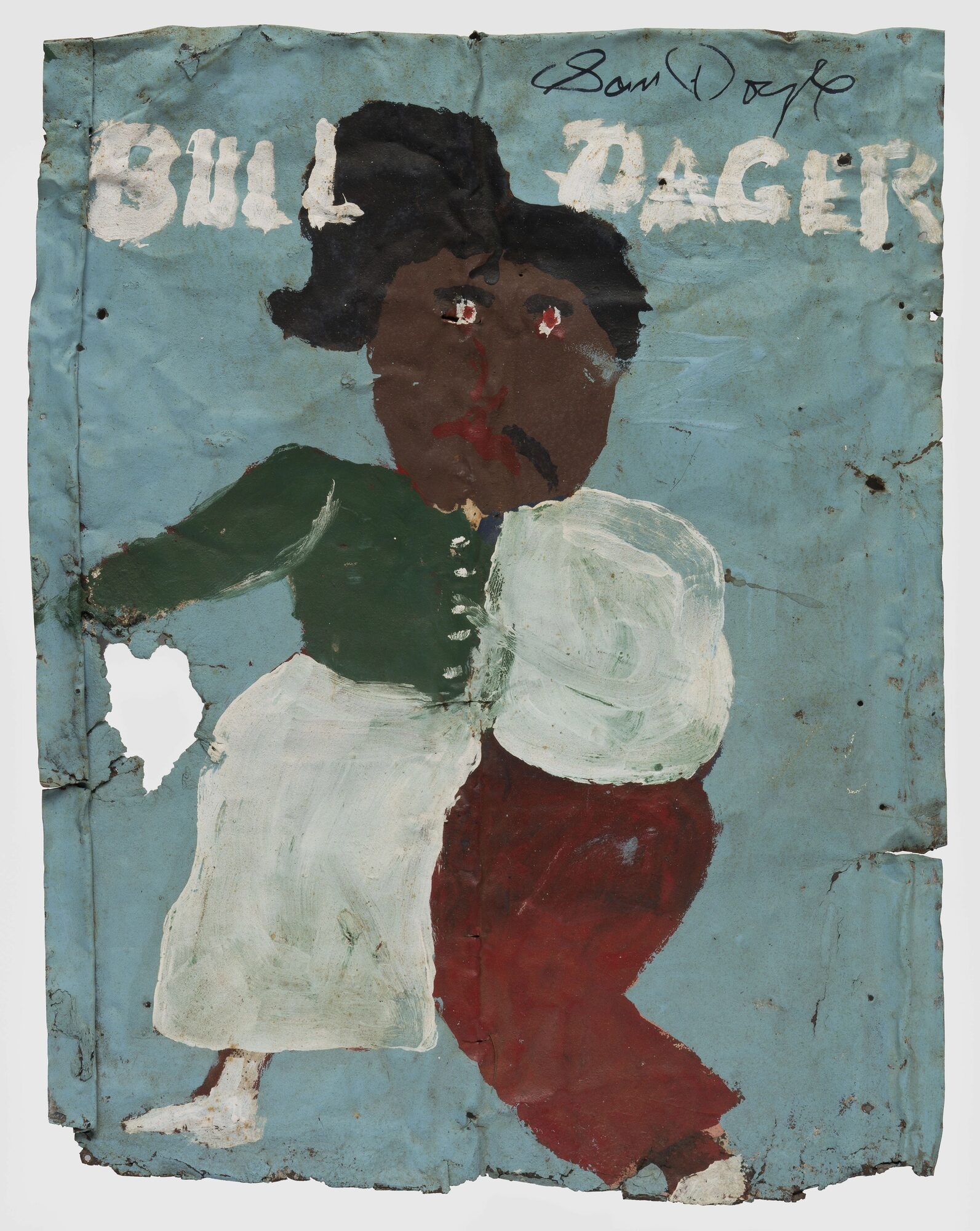
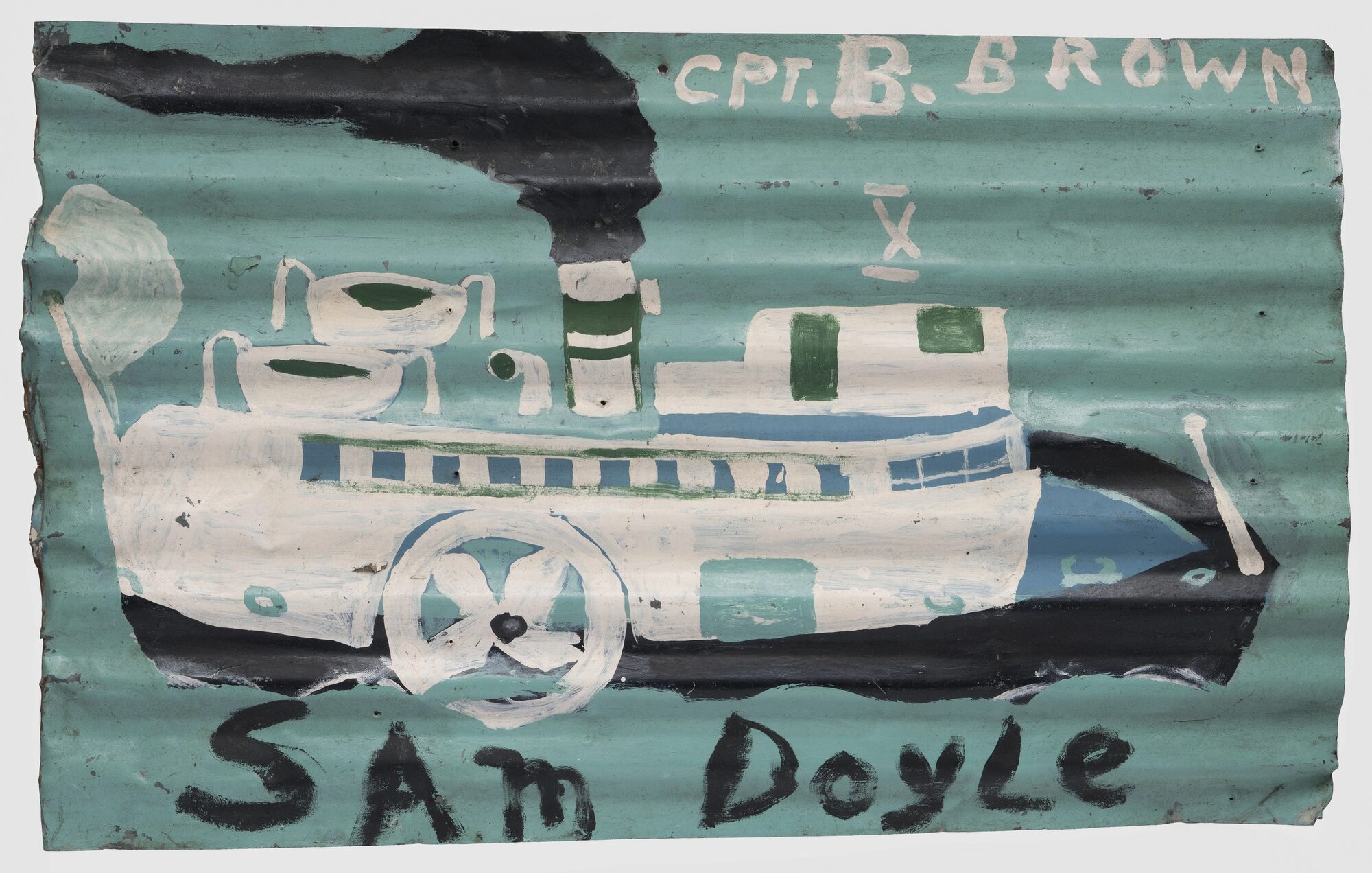
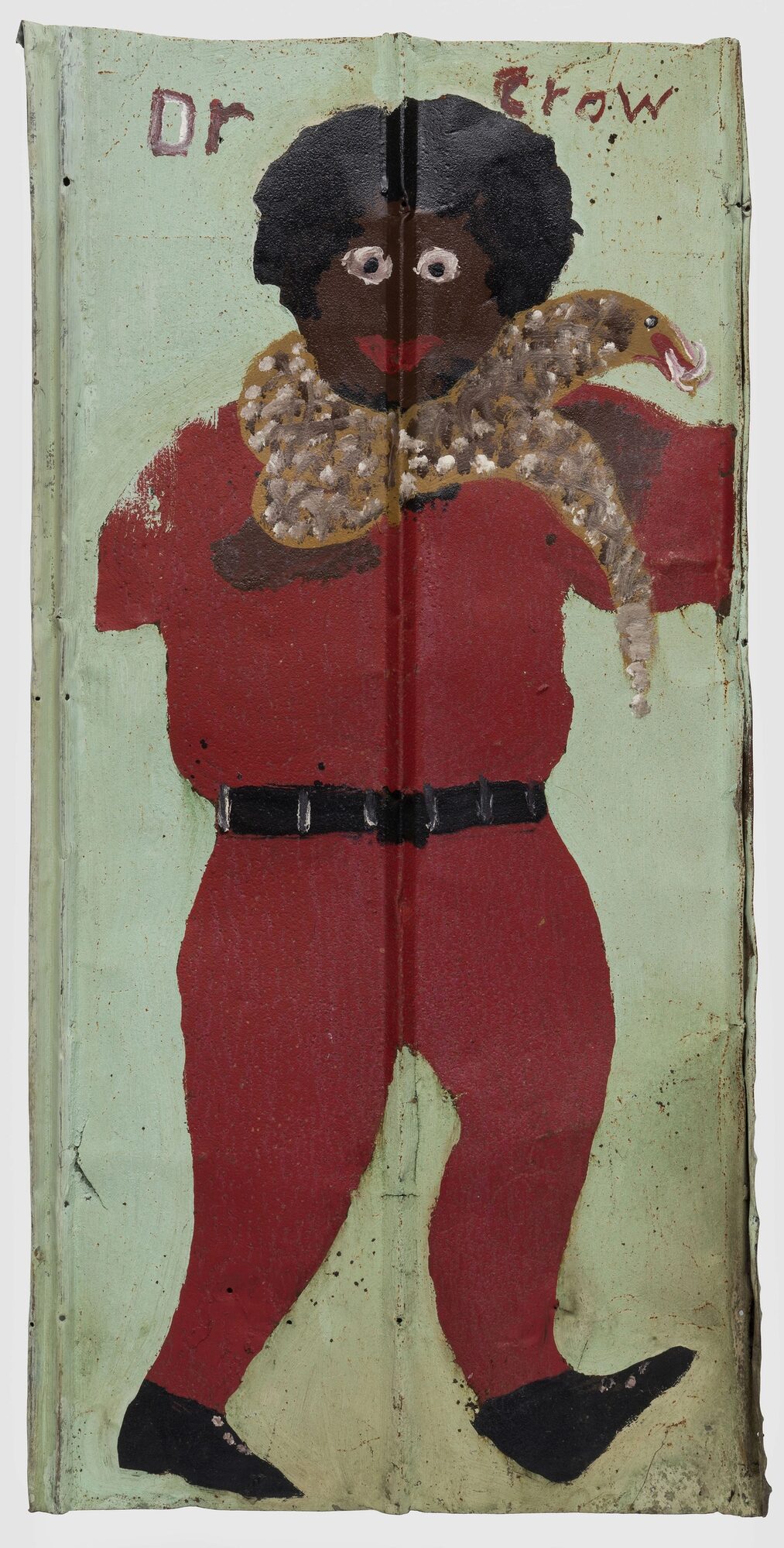
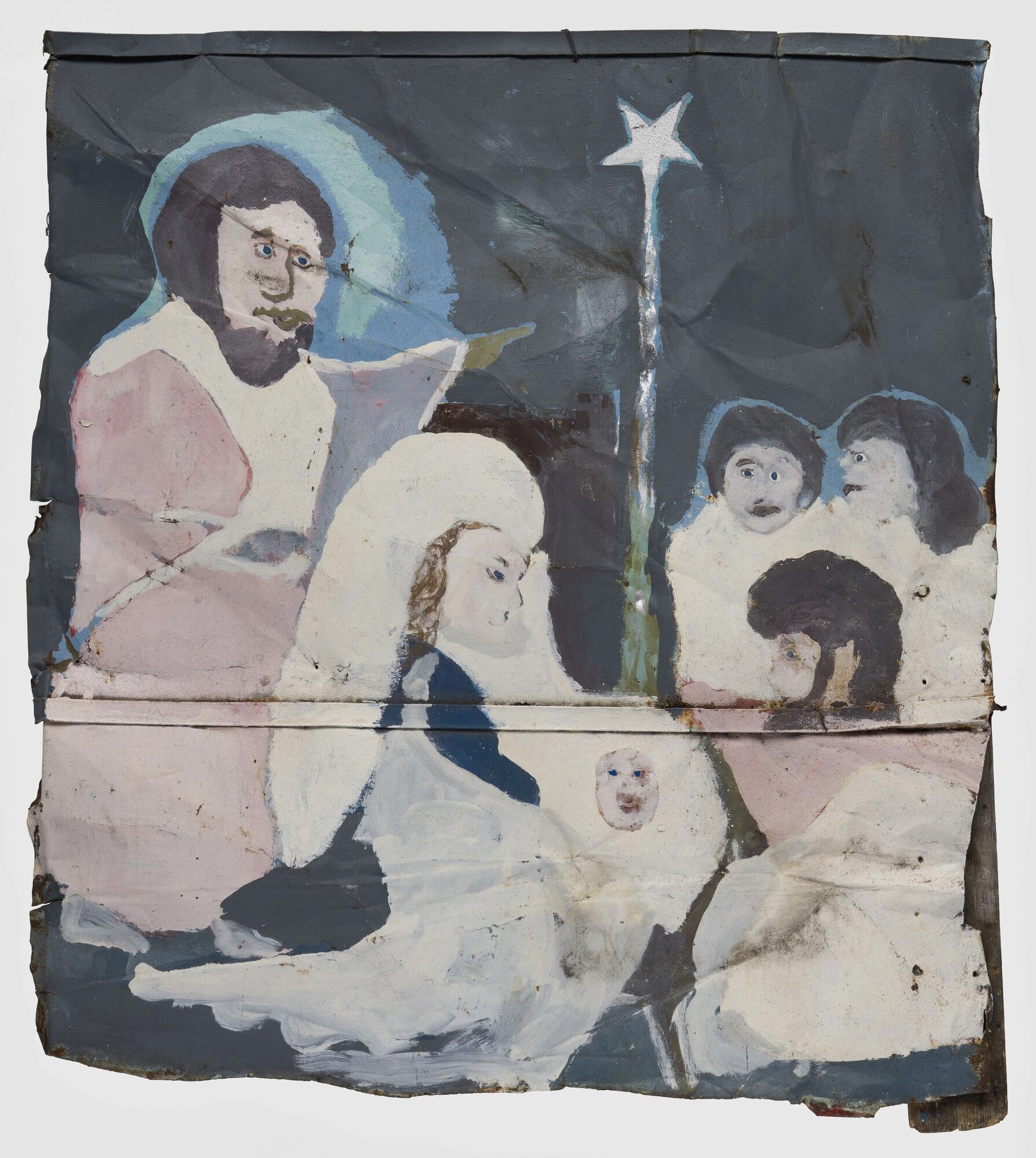
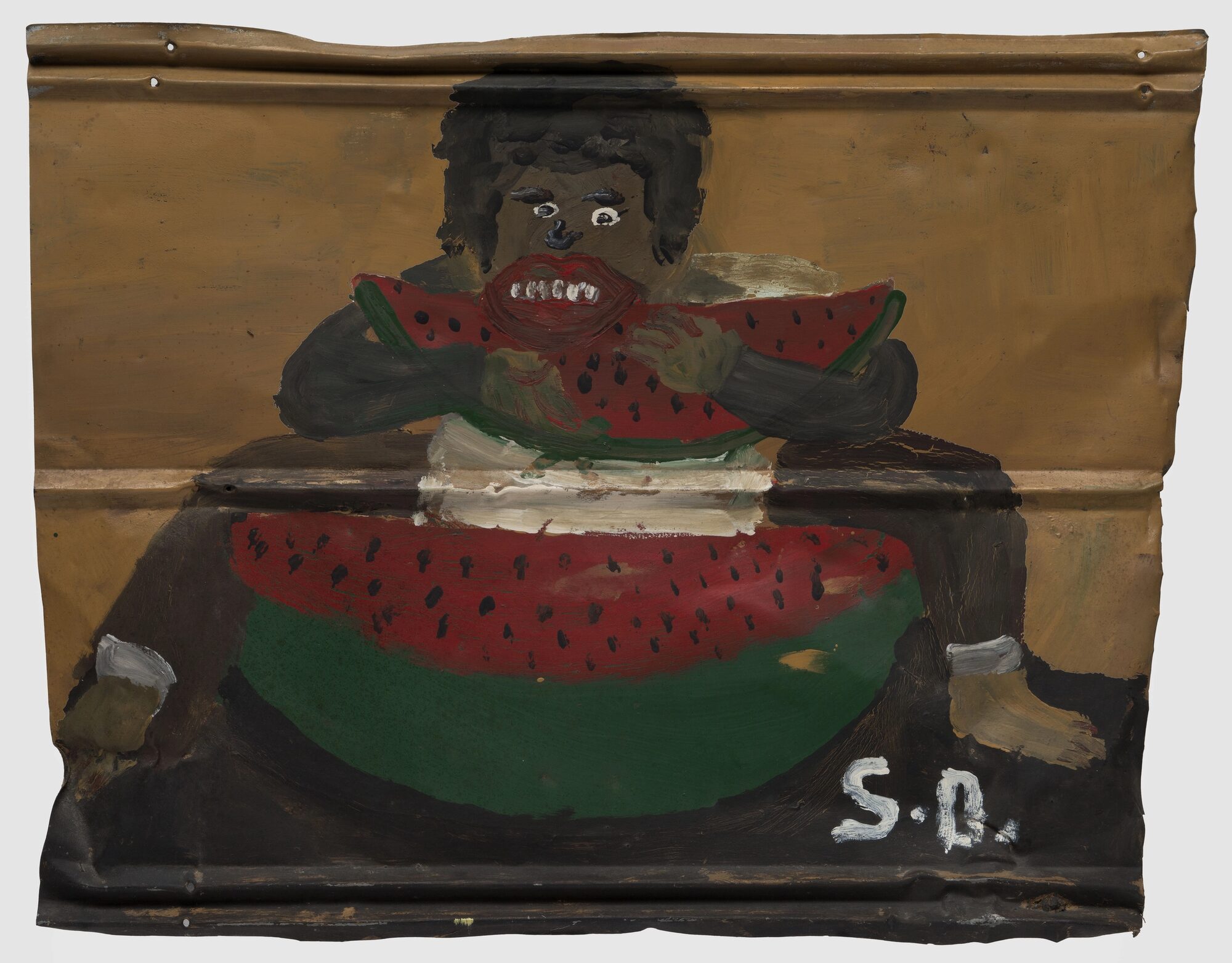
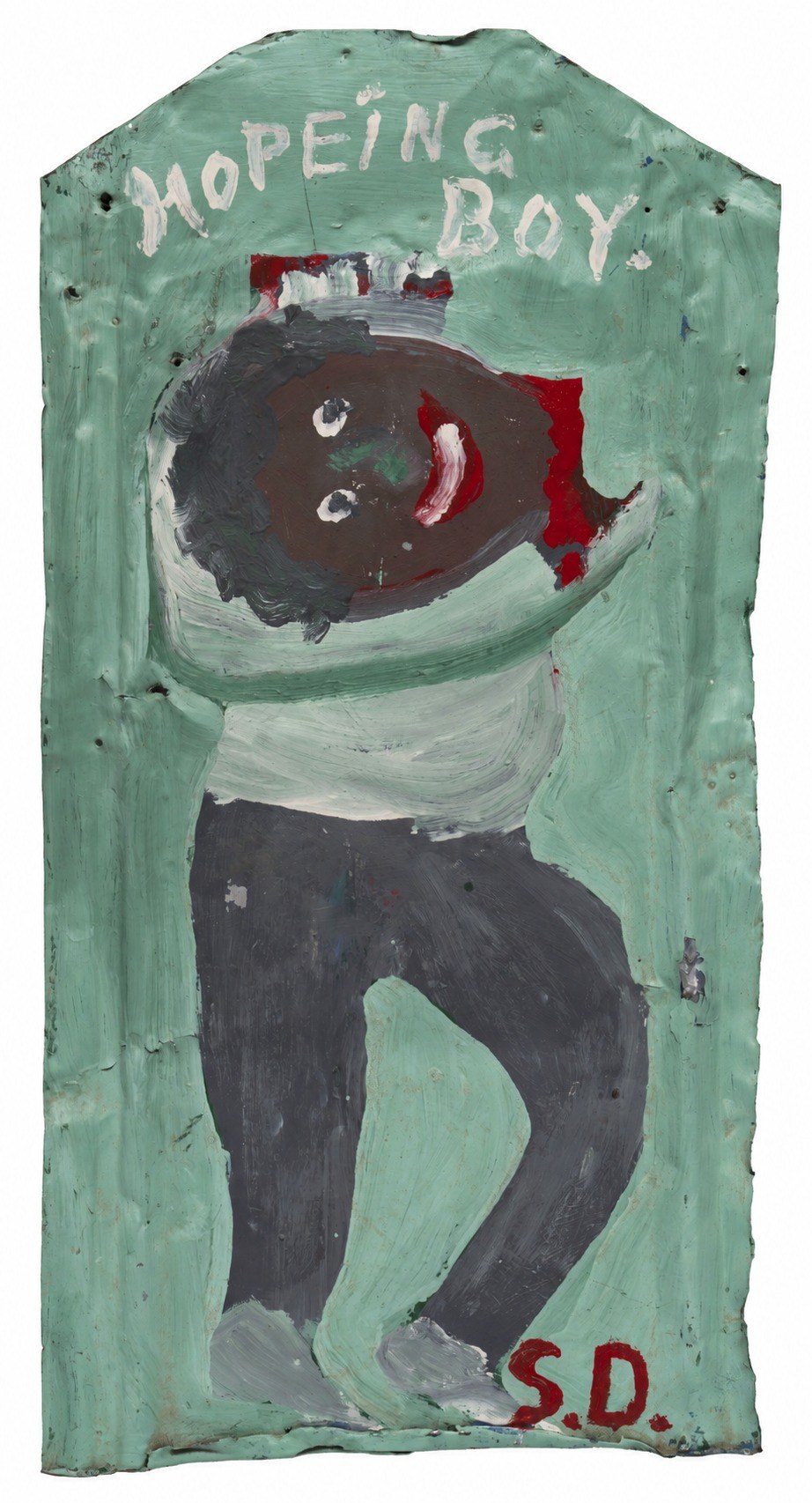
Born into the Gullah community of St Helena Island, South Carolina, Doyle was a self-schooled art-maker, whose graphic paintings, sculptures and assemblies established him as a powerful cultural presence - and would go on to influence the artist Jean-Michel Basquiat.
A natural storyteller steeped in the myths, language and traditions of his ancestors, Doyle used his gift to celebrate the history of Black emancipation, alongside painted icons of politics, culture and sport. Yet he is most widely known for his vivid portraits of friends, neighbors, local heroes and healers - often accompanied by a succinct text in Doyle’s own witty patois.
The front yard of Doyle’s homestead was his platform. His bold housepaint renderings - on corrugated roofing tin, sheet metal and found lumber - were layered across the frontage to form the self-titled St Helena Outdoor Art Gallery. As word of mouth spread, the environment attracted collectors, gallerists and curators alike - including Jane Livingston and John Beardsley, who invited Doyle to participate in Black Folk Art in America: 1930 - 1980 (1982), a seminal touring exhibition of self-taught art.
Doyle had been introduced to a national audience. Yet it was at the Fay Gold Gallery in Atlanta that Jean-Michel Basquiat would first encounter the work and acquire some of Doyle’s most celebrated images. These soon found their way into Basquiat’s studio, where they were displayed prominently and gifted to friends and collaborators, like Andy Warhol.
Today Doyle is widely regarded as a central figure in 20th century African-American art. His pieces are held in major institutional collections, such as the High Museum (Atlanta), LACMA (Los Angeles), PMA (Philadelphia) and MFA (Houston), as well as the Smithsonian (Washington DC) and the American Folk Art Museum (NY).
To view the artworks, please click below. For a wider selection, please contact the gallery.